EMT Practice Test

1. Question Content...


Question List

Question1: Which settings should match on physical interfaces before a network combines them in a link aggregation?

Question2: A network administrator configures OSPF in a network with ArubaOS switches. The administrator is concerned that a rogue device might connect to an access layer switch and introduce OSPF routes to the company's routing topology. The access VLANs do not contain additional routers.
What should the administrator do so switches do not form an adjacency with rogue devices on the access VLANs?

Question3: Refer to the exhibit.

The network administrator enters this command:
Switch(config)# ip route 172.16.2.0/30 192.168.1.100 metric 1 distance 1 Why does this route fail to appear in the IP routing table?

Question4: Which benefit does Aruba Clarity in Aruba AirWave provide?

Question5: A company has a single routing protocol environment.
What is one reason to use OSPF routing instead of static routing?

Question6: Refer to the exhibit.

Prior to implementing OSPF on the network, an ArubaOS switch had the IP routing table shown in the exhibit. The network administrator then sets up OSPF in the network. The switch calculates these OSPF routes to 10.1.20.0/24:
Through 10.1.0.1 with cost 3 and administrative distance 110

Through 10.1.0.2 with cost 3 and administrative distance 110

How does the way the switch handles traffic destined to 10.1.20.0/24 change with the introduction of OSPF?

Question7: A Virtual Switching Framework (VSF) fabric is configured to use LLDP-MAD.
Which action does the standby member take if it sends a probe but receives no response?

Question8: A network administrator wants to be able to access an Aruba Instant cluster at the same IP address even if the current master fails.
How can the administrator achieve this goal?

Question9: Refer to the exhibit.
Exhibit 1.

Exhibit 2.

Assume that Switch-2 is correctly configured for OSPF.
Which additional step must the administrator take to enable Switch-1 to advertise 192.168.2.0/24 to Switch-2?

Question10: A network administrator enters this command in an ArubaOS switch CLI:
Switch(config)# ip route 0.0.0.0/0
The CLI shows this error:
Incomplete input: 0.0.0.0/0
How can the administrator find a valid way to complete the command?

Question11: Refer to the exhibits.
Exhibit 1

Exhibit 2

A network administrator wants to create a backup IP route to 10.1.20.0/24 on Switch-1. The backup route should use Link2, and it should only be used if Link1 is down.
What is the correct setup to accomplish this?

Question12: A network administrator creates a local user account and assigns that account to the Level-9 authorization group. The administrator tests the group assignment and is able to successfully log in with the local user credentials. However, the administrator is able to enter all the commands rather than only the commands permitted by the Level-9 group.
How can the administrator resolve this issue?

Question13: Refer to the exhibit.

Assume that Student A's ARP table is empty. Student A prepares to send an FTP packet to FTP Server B and needs to discover the proper destination MAC address.
For which IP address does Student A send an ARP request?

Question14: Refer to the exhibit.

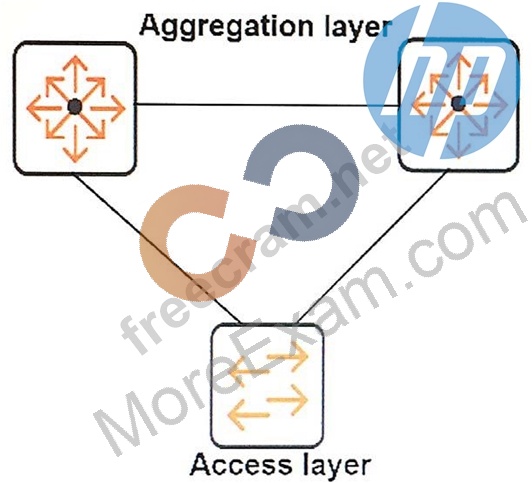
A network administrator installs a new aggregation and access layer in a campus network. All users in this area belong to the same VLAN. The administrator plugs the switches into the network with the factory default configurations.
Which protocol must the administrator configure to prevent broadcast storms?

Question15: Refer to the exhibit.
Exhibit 1.

Exhibit 2.

A network administrator needs to set up DHCP relay in a switched network comprised of ArubaOS switches. Switch A and Switch B have the IP settings in Exhibit 2, and no static or dynamic routes. Switch B is the DCHP server's default gateway. The administrator correctly configures the IP helper address on Switch A However, when the DHCP client attempts to acquire an IP address in VLAN 10, the process fails.
What does the administrator need to do to solve this problem?

Question16: Refer to the exhibit.

Endpoint A sends broadcast ARP requests.
Where are these requests received?

Question17: How does a switch treat a link aggregation?

Question18: Which type of 802.11 wireless network can be hosted by an endpoint device such as a laptop?

Question19: An ArubaOS switch operates at factory default settings. A network administrator enters this command:
Switch (config)# password operator plaintext mysecret
How does the switch now control access to the CLI through the console port?

Question20: What is a requirement for links to successfully participate in an aggregated link?

Question21: What often happens when a Layer2 broadcast domain has a loop?
Question22: The network administrator wants to know which device, type, and manufacturer is connected to port 10 on an Aruba 3810 switch.
Which command could provide this information?

Question23: Refer to the exhibit.

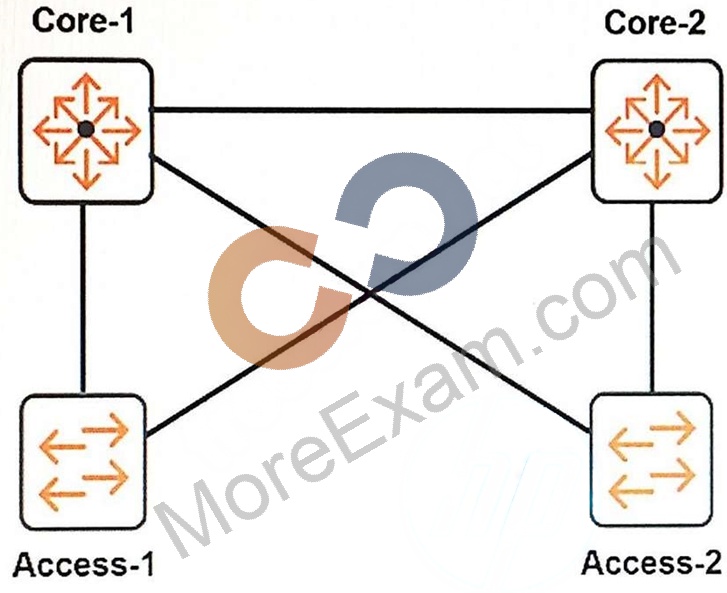
Spanning tree runs on the switches shown in the exhibit. The network administrator enters these two commands:
Switch-1(config)# spanning-tree priority 0
Switch-2(config)# spanning-tree priority 1
The other switches use the default spanning tree priorities. The administrator enters the show spanning-treecommand on Switch-2.
If the configuration is correct, which roles will the output show?

Question24: A network administrator needs to configure a link aggregation on an ArubaOS switch.
For which type of link aggregation is the administrator required to enter the lacpcommand in the interface context?

Question25: Refer to the exhibit.
Exhibit 1.

Exhibit 2.

The routing configuration must support this behavior:
Server 1 and Server 2 communicate over Link 1 when Link 1 is up.
If Link 1 fails, Server 1 and Server 2 can continue to communicate over the path through Switch-3.
What must the network administrator change to meet these criteria?

Question26: A network administrator uses the console to access an ArubaOS core switch and wants to find the management IP address of another ArubaOS switch that is currently connected to port B1. Which information should the administrator review?

Question27: Why would a network administrator use strict provisioning to configure the standby member in a Virtual Switching Framework (VSF) fabric?

Question28: A company has an Aruba 5400R switch, switch 1, at the network core of its campus. This switch routes all traffic for the campus and is the RSTP root. The company now wants to add another Aruba 5400R switch to the core in order to enhance resiliency. The company wants to use the option that provides the best Layer 2 and Layer 3 resiliency and also the simplest setup.
What should the administrator do to add the new 5400R switch?

Question29: A network administrator has copied new software to an ArubaOS switch and placed this software in the secondary flash location. The switch is currently booting from the primary location. The administrator wants the switch to start using the new software.
What should the administrator do to accomplish this?

Question30: A network administrator needs to configure a static route.
What should the administrator use as the next hop address?

Question31: A network administrator discovers and then authorizes several ArubaOS switches in Aruba AirWave.
Immediately after the administrator authorizes the switches, AirWave cannot communicate with the switches anymore.
What should the administrator do to restore communication?

Question32: A network administrator prepares an ArubaOS switch to be monitored and managed by AirWave.
Which credentials are required for AirWave to change configuration settings on the switch?

Question33: What is a valid setup for a Virtual Switching Framework (VSF) fabric?

Question34: What is one benefit that Aruba AirWave can provide to a customer with ArubaOS switches?

Question35: A network administrator wants to download a configuration from an ArubaOS switch. The administrator does not have local access to the switch and wants to copy the configuration in a secure manner that prevents eavesdroppers from reading the configuration. Which two options can the administrator use to copy the configuration?

Question36: A network administrator just received two switches and wants to use the plug-and-play method to establish a Virtual Switching Framework (VSF) fabric with the fewest steps possible.
What must the administrator do to establish the fabric in this way?

Question37: Refer to the exhibit.

Based on the topology shown in the exhibit, which symptom does a network administrator see if the ArubaOS switches are in their factory default states?

Question38: An ArubaOS switch operates at its factory default settings. A network administrator connects the switch to a VLAN with a DHCP server. The switch-to-switch connection carries untagged traffic. The administrator wants to use Telnet log in to the switch CLI.
How should the administrator contact the switch and log in?

Question39: Refer to the exhibit.

Switch 1 shown in the exhibit is an ArubaOS switch that has an uplink to the network core on interface 25.
The network administrator wants to add a link on interface 26. The administrator creates a link aggregation with this command:
Switch1 (config)# trunk 25-26 trk1 lacp
What else must the administrator do to enable the Switch 1 link aggregation to successfully pass all traffic to the core?

Question40: Refer to the exhibit.
Exhibit 1.

Exhibit 2.

Which devices can communicate with each other at Layer 2?

Question41: How does a wireless network differ from a wired network?
Question42: A network administrator wants to pre-configure new MSTP region settings on ArubaOS switches, and then apply the new settings at a later time. How can the administrator pre-configure the settings?

Question43: Refer to the exhibit.

Device 1 needs to send traffic to Device 2, and it sends an ARP request in preparation.
Which devices process this ARP request?

Question44: Which configuration settings for an ArubaOS switch must be deleted from a physical interface before it can be associated with a Virtual Switching Framework (VSF) link?

Question45: An ArubaOS switch is protected with a manager password. The network administrator wants to back up the configuration and apply it to other switches. The administrator wants the manager password to be available in both the saved and running configuration.
To accomplish this goal, what must the administrator do before the configuration is backed up?

Question46: An ArubaOS switch provides PoE+ to several Aruba APs. Users might also connect PoE devices to this switch. In a situation where the switch PoE capacity is exceeded, the network administrator wants to ensure that the switch continues to power the APs in preference to other devices.
What should the administrator do to achieve this goal?

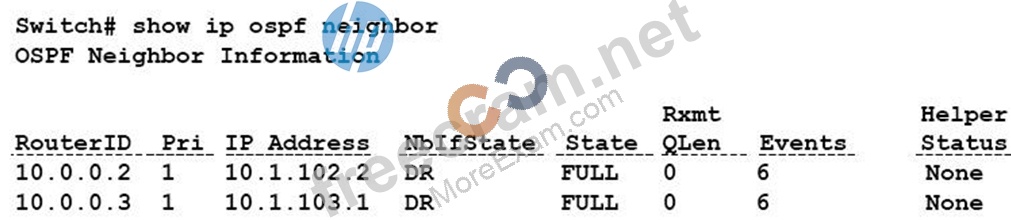
Question47: Refer to the exhibit.

Based on the output shown in this exhibit, which statement is true about the 10.0.0.2 neighbor?

Question48: Which security benefit does SNMPv3 offer that SNMPv2 does not offer?

Question49: A server connects to a port on an ArubaOS switch. The network administrator wants to ensure that the port remains forwarding during MSTP topology changes, and changes in the port status do not cause MSTP topology changes.
Which statement describes how the administrator can accomplish this?

Question50: Refer to the exhibit.

This switch currently assigns all VLANs to MSTP instance 0 or the Internal Spanning Tree (IST).
Which statement correctly describes interface 21?

Question51: A network administrator plans two interfaces for a Virtual Switching Framework (VSF) link. Which best practice should the administrator follow?

Question52: Which ArubaOS switch feature treats multiple ports as one logical port?

Question53: What does the traceroute command that is entered on an ArubaOS switch identify?

Question54: Which technology enables a network administrator to group users by logical function instead of physical location, reduce bandwidth waste by limiting broadcast traffic, and improve security by isolating users at Layer2?

Question55: Refer to the exhibit.

The student A client needs to connect to FTP Server B Student A sends the necessary ARP request and receives a reply.
Which destination MAC address does the Student A client use in the FTP packet to FTP Server B?

Question56: Refer to the exhibit.

A network administrator views the configuration files on an ArubaOS switch and sees the output in the exhibit. The administrator enters this command:
Switch# boot system flash primary config config2
After the switch boots, the administrator makes some configuration changes and saves the configuration with the write memory command. The administrator then enters this command:
Switch# boot
After the switch boots, the configuration changes just made are not present.
How can the administrator restore the configuration with the changes?

Question57: Refer to the exhibit.

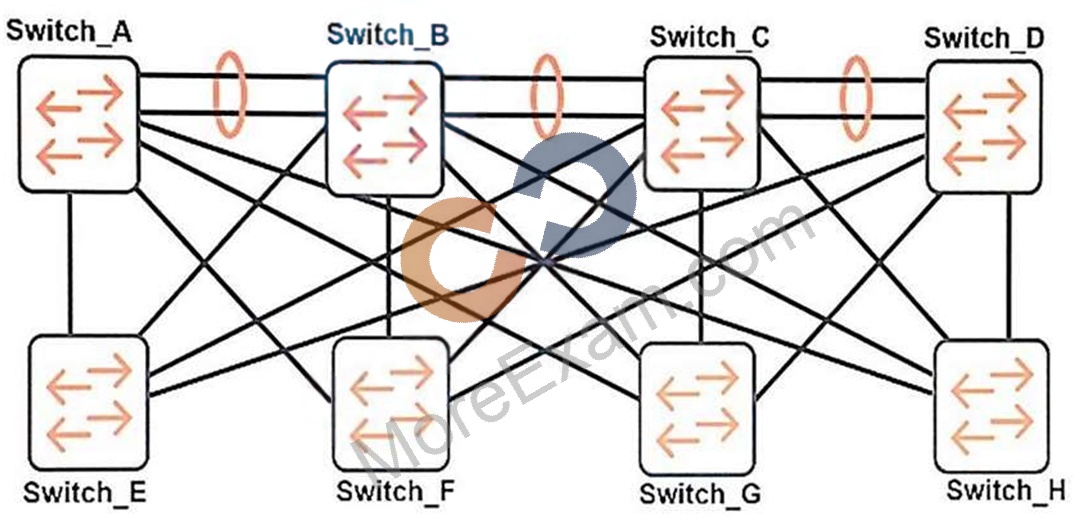
MSTP is implemented in the topology shown in the exhibit, and all the switches are in the same region.
The network administrator does not want to use the Internal Spanning Tree (IST) or instance 0 for production traffic.
How many non-IST spanning tree instances does this network need in order to have effective load sharing on the uplinks from the access switches?

Question58: Refer to the exhibit.

A network administrator logs in to the CLI of a Virtual Switching Framework (VSF) fabric and enters the command shown in the exhibit.
What does the output reveal?

Question59: A network administrator is in this context in an ArubaOS switch CLI:
Switch (vlan10)#
The administrator wants to leave the configuration context with a single command/ Which command should the administrator enter?

Question60: A company wants a modular switch for the core layer of its mid-sized campus. The switch requires 32 10 G ports in a single switch with the ability to scale in the future. Which ArubaOS switches series is best suited for this role?

Question61: Refer to the exhibit.
Exhibit 1.

Exhibit 2.

Exhibit 3.

How many MSTP regions exist in the topology shown in the exhibit?

Question62: A network administrator needs to complete the initial setup on an ArubaOS switch with the use of remote access. How can the network administrator do this?

Question63: Refer to the exhibit.
Exhibit 1.

Exhibit 2.

PC1 cannot reach PC2.
Based on the exhibits, what could be the cause of this issue?

Question64: A Virtual Switching Framework (VSF) fabric currently has two members and two physical 10GbE links in its VSF link.
Which administrative task can a network administrator perform on this VSF fabric when both members are online?

Question65: A manager password is configured on an ArubaOS switch. The network administrator wants to ensure managers only use SSH to connect to the ArubaOS switch for CLI access. Which step should the administrator complete to accomplish this?

Question66: A network administrator implements a wireless network that uses three wireless APs. The administrator wants to ensure that users can roam seamlessly from one AP to another. Which type of wireless network should the administrator implement?

Question67: How can a network administrator configure an ArubaOS switch to automatically assign the correct tagged VLANs to a port when an Aruba AP connects to that port?

Question68: An interface on an ArubaOS switch did not receive any BDPUs and has the spanning tree auto-edge setting. What describes the effect of this setting?

Question69: Two switches are members of a Virtual Switching Framework (VSF) fabric.
Which statement correctly describes how the switches handle routing?

Question70: Which standard for wireless connectivity supports the fastest data rates and Multi-User Multiple Input/ Multiple Output (MU MIMO)?

Question71: Refer to the exhibit.

Based on the exhibit, what is the problem?

Question72: A network administrator plans to set up a WLAN on an Aruba Instant cluster. The WLAN uses WPA/WPA2 Enterprise security. The administrator wants no authenticate users locally on the cluster.
How should the administrator configure me credentials?